A look through generations
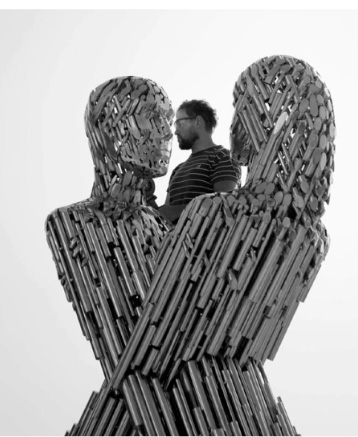
Petro Antip's sculpture "A View Through Generations", made of brass, is a symbolic dedication to two prominent figures of the Transcarpathian school of painting - Adalbert Erdel and Volodymyr Mykyta. It embodies the idea of the continuity of artistic tradition, which is formed through experience, learning, and cultural continuity.
Adalbert Erdeli, together with Josip Bokshai, stood at the origins of the formation of the Transcarpathian school of painting. As an artist and teacher, he created an environment in which a new generation of artists grew up, laying the foundations of professional art education in the region. His activities were associated with an orientation to the broader European artistic context, attention to the culture of color, form, and the psychological expressiveness of the image. Among his students was Volodymyr Mykyta, who later became one of those who continued and developed this tradition. In his work, Volodymyr Vasylevich preserved the key principles of the Transcarpathian school: interest in the problems of the dynamics of form and image, rich color, while giving them a new sound through an appeal to folk culture, the theme of human labor, and the Carpathian world, which in his painting acquire symbolic depth.
The composition of the sculpture is built on two generalized figures, located opposite each other and connected by a common frame plane. The sculpture is laconic and devoid of small details. Brass emphasizes the feeling of duration and weight. Both figures hold brushes in their hands and are focused on the creative process. It is the gesture of writing that becomes the key semantic accent: tradition is transmitted not through words, but through work, through the very act of creation. The frame plays a special role - it is both a boundary and a bridge, and at the same time a conditional space of art in which different generations are united.
The sculpture "A View Through Generations" was created as an image of memory and gratitude and reminds us that a true artistic vision does not disappear - it is passed on from teacher to student, from one generation to another. This continuity preserves not only skill, but also a worldview and values, thanks to which culture does not die out, but lives and develops further.