The Kiss of Judas
Peter Antipas' sculpture "The Kiss of Judas" addresses one of the most tragic and at the same time most famous plots in Christian history. It is not just a recreation of a biblical event, but an artistic interpretation of human nature, freedom of choice, trust, and responsibility.
The work is based on one of the key episodes of the Gospel story. Judas Iscariot, one of the twelve apostles, agrees to betray his Master for thirty pieces of silver. In order for the messengers to recognize Christ among His disciples in the Garden of Gethsemane, Judas uses a kiss - a sign that in Jewish tradition was an expression of respect, peace and close relationships. It is after this gesture that the events that lead Christ to Golgotha unfold.
In the Christian tradition, this event has acquired a special significance. It speaks not only of the betrayal of one person, but also of the drama of human freedom. The tragedy of the image of Judas lies in the fact that he was not an external enemy of Christ, but one of His closest disciples.
The image of Judas and the Gospel plot of betrayal have found various incarnations in European art over the centuries. Giotto and Caravaggio depicted the moment of the kiss and arrest of Christ, Leonardo da Vinci - the tension of the Last Supper after the words about the upcoming betrayal, and Rembrandt - the repentance of Judas, who returns the thirty pieces of silver. In these works, the artists' attention is focused on different stages of the same story: the premonition of betrayal, its implementation and its consequences. That is why the expression "Judas' kiss" has long become a cultural metaphor for hidden betrayal, hypocrisy and loss of trust.
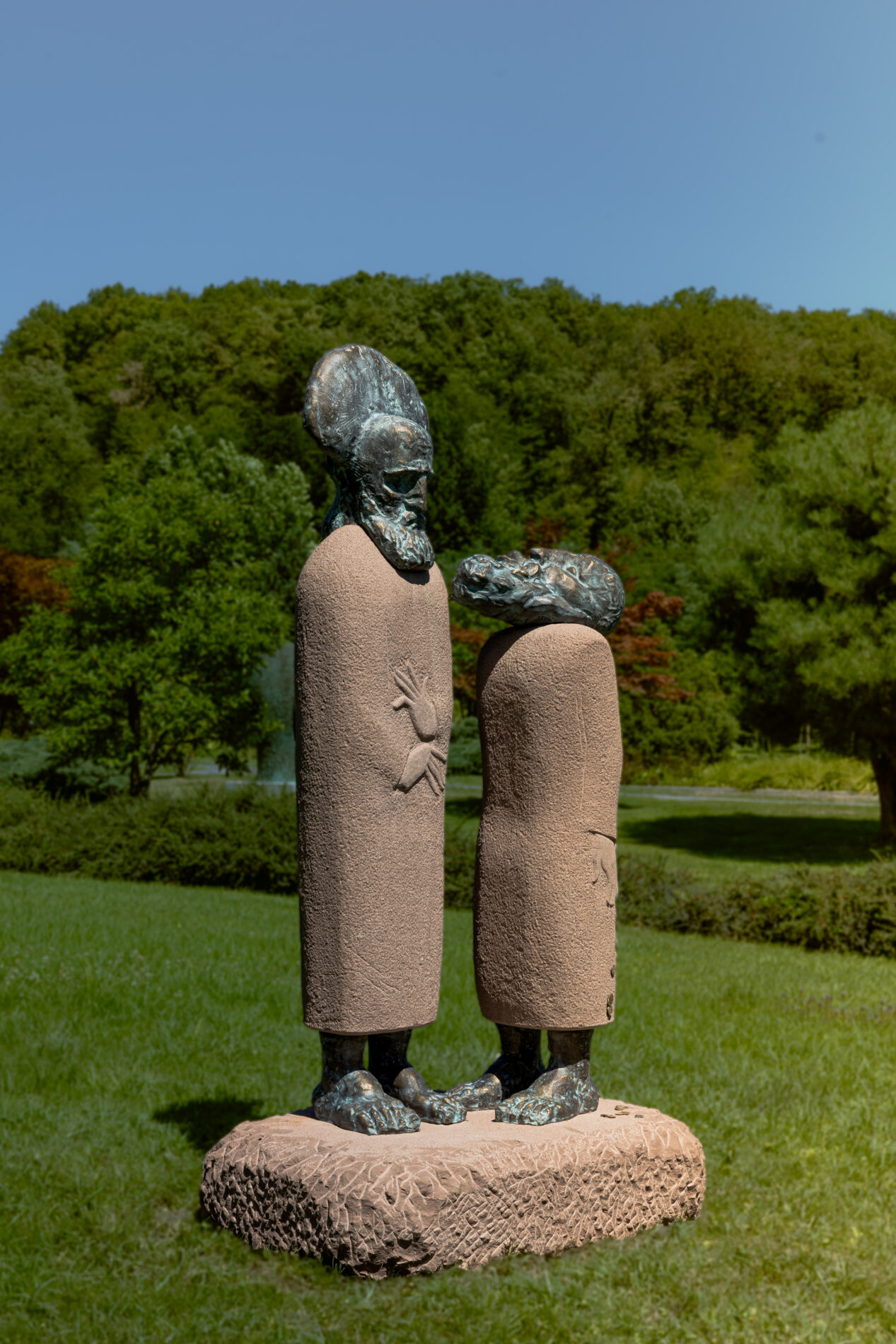
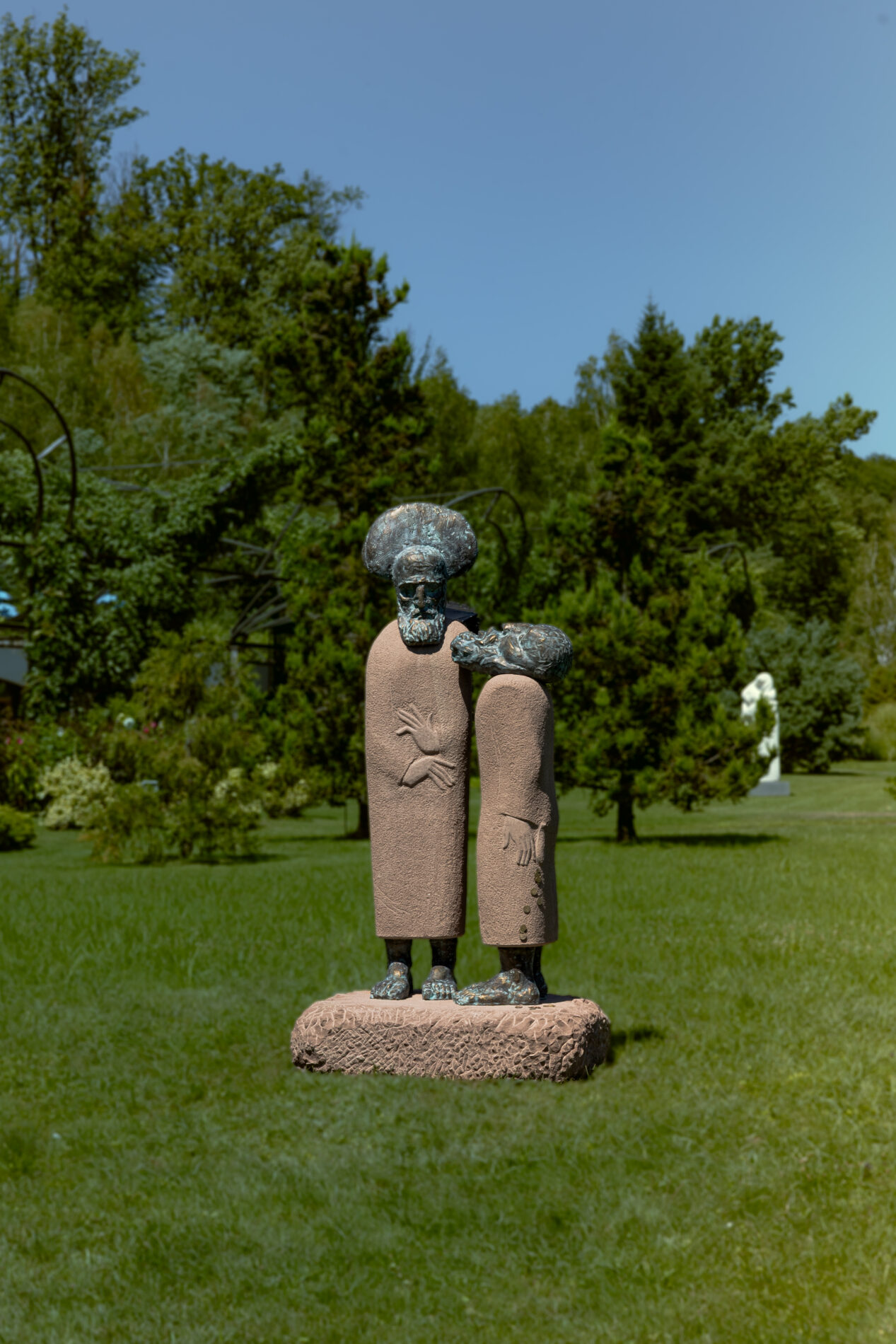
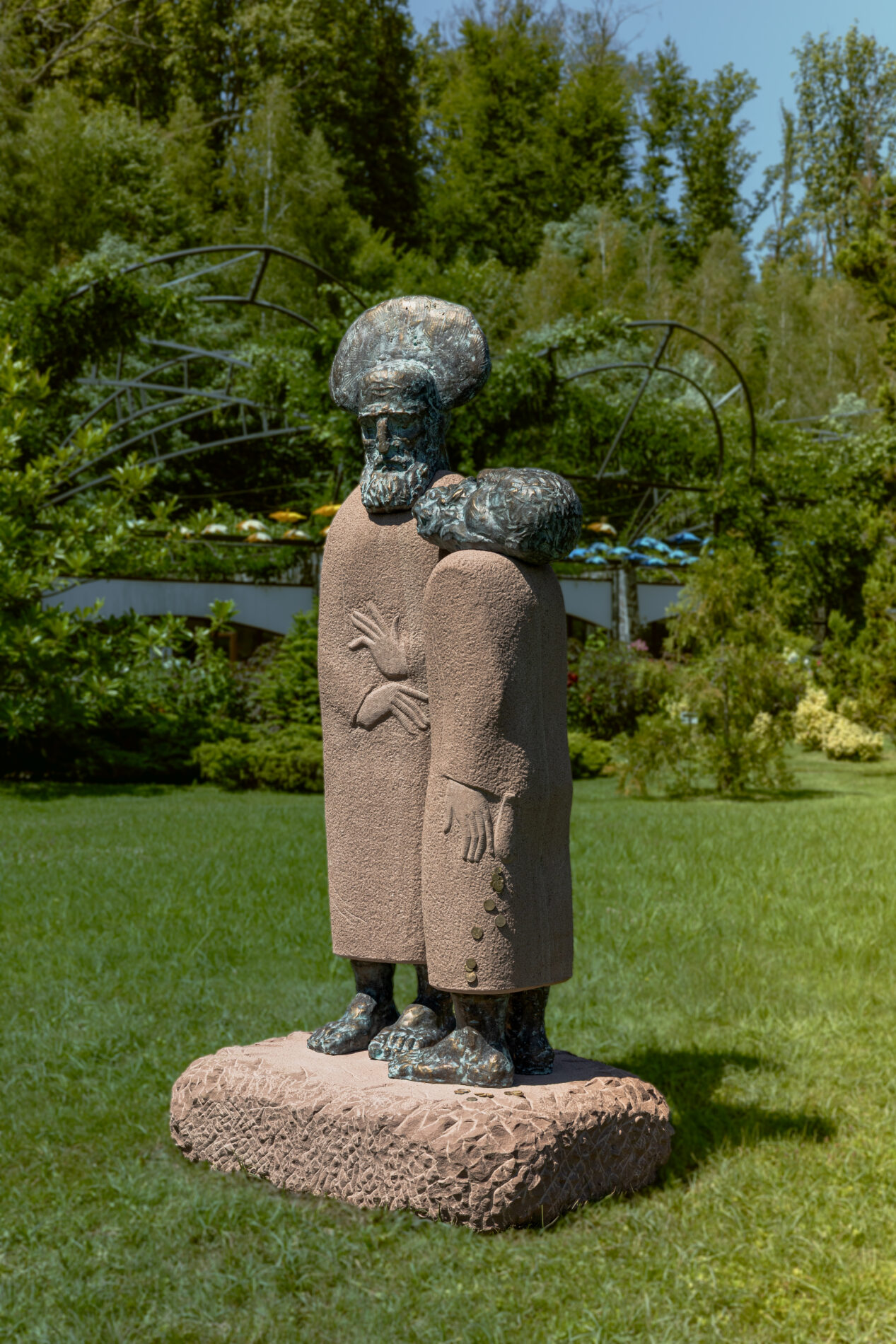
Petro Antip does not seek to literally recreate the Gospel scene in his work. His plastic language is restrained and generalized. The two monumental figures are solved laconic, without small details.
The image of Judas deserves special attention. Unlike Christ, his head is designed almost like an uncut stone. It is devoid of a human face, resembling a heavy boulder. The sculptor transforms the head not into an anatomical detail, but into a semantic accent of the composition. Such a plastic solution can be perceived as an artistic metaphor for spiritual petrification. In the biblical tradition, a "stone heart" is an image of a person who has lost the ability to hear God, sympathize and open himself to the truth. It is because of this association that Judas' stone head can be read as a symbol of the inner state of a person, which is gradually moving away from goodness. A person ceases to be himself, gradually loses his own face and becomes a bearer of moral decline.
The proportions of the figures are no less telling. The figure of Judas looks smaller next to Christ. This is not a physical contrast of strength and weakness, but an artistic device that emphasizes the different spiritual scale of the images. The Gospel does not show Judas as a winner. After his deed, he finds neither peace, nor joy, nor true reward.
“The Kiss of Judas” is not just a story about one biblical event. It is a reflection on human choice, responsibility, and the power of moral decision. The sculpture reminds us that the most important decisions are made long before they become noticeable to others. That is why this work sounds timeless, prompting us to think about the true price of human choice.